Skate Tech — Established 2010

SHARPENING & PROFILING

FIND YOUR
EDGE.

A blade setup that starts with how you skate.

WHY PROFESSIONAL SHARPENING MATTERS

A GOOD EDGE STARTS
WITH A SKILLED HAND.

Good sharpening means more than a blade that feels sharp. Even edges, a smooth finish and a hollow that suits you all contribute to a consistent feel on the ice.

Even edges you can trust

The inside and outside edges need to be level. Uneven edges can make one side feel different from the other when you turn or stop. Checking edge height is an important part of a careful sharpening.
A clean, consistent finish

Sharpening can leave tiny metal burrs along the blade. Removing them and checking the finished edges helps leave the blade ready for the ice.

The right amount of bite

A deeper hollow generally gives more grip; a shallower hollow generally allows more glide. An experienced technician can help you choose a starting point based on your skating and adjust it with your feedback.

Tell the team what you like about your skates and what feels different. A familiar hollow and consistent sharpening make it easier to understand your setup.

BLADE BASICS / EXPLAINED SIMPLY

EDGES GIVE YOU GRIP.
PROFILES SHAPE THE RIDE.

Sharpening and profiling work together, but they change different parts of your skate blade.

01 / LOOKING AT THE BLADE END-ON

EdgeHollowEdge

What are the edges for?

A hockey skate blade has two edges: an inside edge toward your other foot and an outside edge facing away. You use both as you lean, push off, turn and stop.

Sharpening forms a curved groove between them, called the hollow. A deeper hollow generally gives more bite; a shallower hollow generally gives more glide. Level edges help the blade feel consistent on either side.

02 / LOOKING AT THE BLADE SIDE-ON

HeelToeHeel-to-toe profileIce

What does profiling do?

Profiling shapes the blade’s curve from heel to toe. It changes how the steel contacts the ice and can affect balance, turning, stability and how a stride feels.

A shorter radius is more curved and generally favours manoeuvrability. A longer radius is flatter and generally favours stability. Profiles can also combine different radii along the blade.

Where does pitch fit in?

Pitch adjusts the blade setup’s balance toward the front or back. Your profile, pitch and hollow should be considered together, based on your skate size, skating style and preferences. There is no single setup that suits everyone.

Diagrams are simplified and exaggerated to show the difference. Ask the Skate Tech team which setup makes sense for you.
¼ INCH / ½ INCH / AND BEYOND

CHOOSE YOUR BITE.
UNDERSTAND YOUR HOLLOW.

When you ask for a “half-inch sharpening,” you’re choosing a radius of hollow (ROH). The number describes the radius of the circle used to form the groove—not the depth of metal removed. A smaller radius makes a deeper hollow; a larger radius makes a shallower one.

¼″1/4 INCH HOLLOW
Two edges meet the ice

DEEPEST / MORE BITE

⅜″3/8 INCH HOLLOW
Two edges meet the ice

DEEP

½″1/2 INCH HOLLOW
Two edges meet the ice

MIDDLE OF THIS RANGE

⅝″5/8 INCH HOLLOW
Two edges meet the ice

SHALLOWER

¾″3/4 INCH HOLLOW
Two edges meet the ice

SHALLOWEST / MORE GLIDE

END-ON VIEWS · Same illustrative blade width in every diagram. Groove depth is exaggerated equally (8×) to make the differences visible; these are not full-scale blade drawings. Blue curves show the hollow between the two edges.

¼″MORE BITE⅜″½″⅝″¾″MORE GLIDE
Relative feel of common hollow sizes · For the same blade and conditions
HollowFeel on the iceWho might consider it?
¼″ (1/4)Very deepStrongest bite in this comparison; more drag.Skaters specifically seeking an aggressive grip. Discuss this deep cut with your technician first.
⅜″ (3/8)DeepMore bite, less free glide than ½″.Skaters who want extra grip and find shallower cuts too slippery.
½″ (1/2)Middle of this rangeA balance of bite and glide compared with the cuts shown.Skaters exploring a middle-ground feel, then adjusting based on their experience.
⅝″ (5/8)ShallowerMore glide and less bite than ½″.Skaters who feel their current cut grips too much or want easier release.
¾″ (3/4)ShallowMore glide, less bite than the smaller radii shown.Skaters comfortable with less grip who prefer a freer-gliding feel.

¼″ versus ½″: what’s the difference?

On the same blade, ¼″ creates a deeper hollow than ½″. It generally grips more strongly but adds resistance to gliding and releasing the edges. ½″ is shallower and generally feels less grabby by comparison.

Weight, blade width, ice conditions, technique and preference affect the result. These are relative comparisons, not fixed recommendations by age or position. Ask the team which cuts are available and what makes sense for your setup.

Hollow = the groove across the blade. Profile = its curve from heel to toe.

COMPARE THE FEEL

WHICH PROFILE
FITS YOUR GAME?

Start with how you skate—not just your position. These common profile types illustrate different approaches. Skate Tech uses the Maximum Edge system; call to confirm available profiles, sizing and pricing. The branded examples below are educational, not a menu of confirmed shop services.

Common profile types and who may want to discuss them
Profile typeWhat it changesWho it may suit
Single radiusOne radius through the main skating area. Shorter radii are more curved; longer radii are flatter.Skaters who prefer a straightforward, consistent curve and want to explore agility versus stability.
Combination / multi-radiusDifferent radii along the blade, balancing the feel of its skating zones.Skaters seeking a mix of turning response, stride support and balance.
Quad PROSHARP BAUER exampleFour radii supporting the blade’s skating zones.Skaters who favour long, powerful strides.
Zuperior PROSHARP BAUER exampleA profile designed around agility and a more toe-oriented skating style.Quick, nimble skaters seeking an agile feel.
Ellipse PROSHARP BAUER exampleA progressively changing curve for a smooth transition along the blade.Skaters looking for a flowing heel-to-toe feel and a balance of power and agility.
Goalie profilesGoalie-specific shapes, such as SAM and Goalie Ellipse, address crease movement.Goaltenders discussing stability, footwork and shuffle response with a technician.

Choose it with your technician.

Skate size, steel, current setup, technique and personal preference all matter. Tell us what you like—and what you’d change—about your skates. A profile’s name alone doesn’t determine the right fit.

Ask about your profile
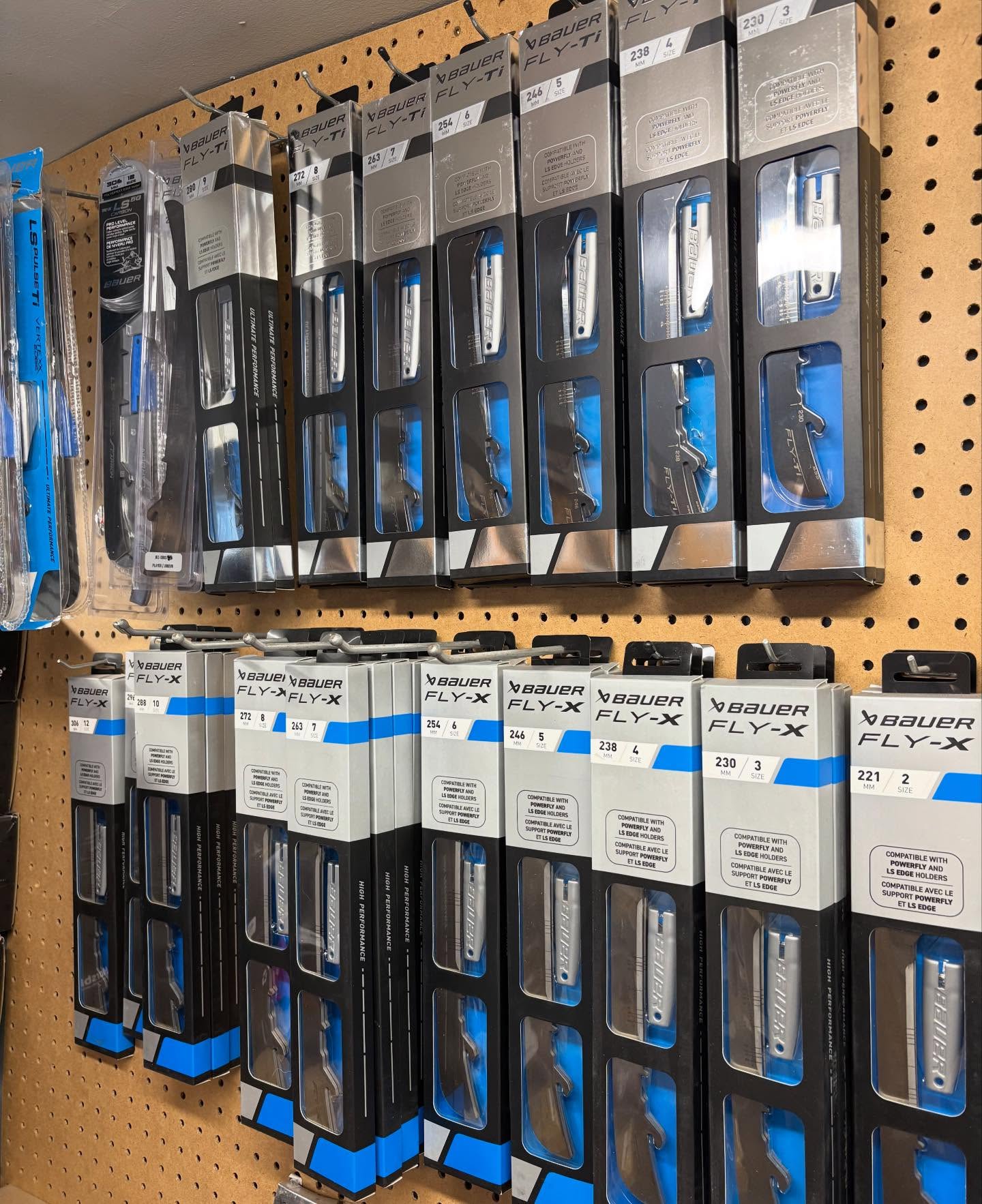
Packaged replacement skate runners on display at Skate Tech
Replacement steel display · Skate Tech

GOOD GEAR. GOOD ADVICE.

LET’S TALK
ABOUT YOUR STEEL.

Have questions about your runners or current blade setup? Bring your skates and talk it through with the team.

Call to check current stock, sizes and compatibility before you visit.

02 / THE MAXIMUM EDGE DIFFERENCE

SMALL DETAILS.
BIG FEEL.

Your blades should work with you. We use the Maximum Edge Skate Profile System to tailor radius, profile and pitch to your individual skating style.

Tell us how you skate and what you want to feel. We’ll help you understand your setup and find an edge you can trust.

READY FOR YOUR NEXT SHIFT?

Visit the shop